The signal before the sale: why timing beats volume in outbound
The strongest outbound motion does not start with a bigger list. It starts with knowing which accounts have a reason to care right now.
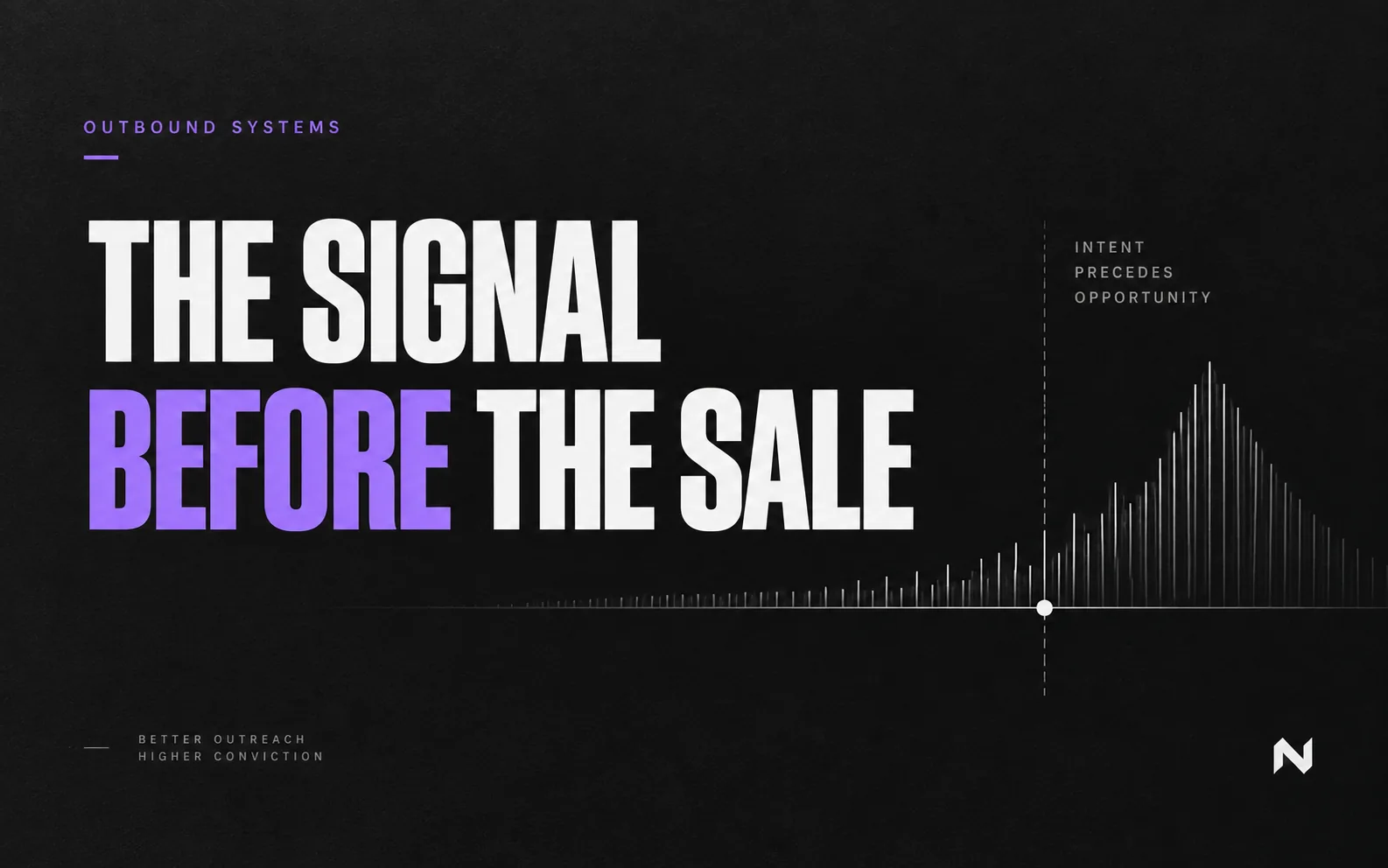
Most teams do not have a volume problem. They have a timing problem. They are sending thoughtful messages to accounts that have no active reason to change.
That is why a larger list, a faster sequencer, or another layer of personalization rarely fixes a stalled outbound motion. The system is looking for people. It should be looking for moments.
Intent is a window, not a score
A funding announcement, a new executive hire, a changing tech stack, or a sudden burst of category research can create a short window where an account is unusually open to a conversation. The value is not in assigning a perfect number to that activity. The value is in recognizing that the window exists.
When the signal is connected to a clear use case, outreach becomes less like interruption and more like relevance. The message has a reason to arrive.
Good outbound does not manufacture urgency. It notices when urgency is already there.
Build the system around the moment
A practical signal-led motion has three layers:
- Observe: monitor the public changes that matter to your ICP.
- Interpret: connect each change to a business problem your offer solves.
- Act: reach out while the context is still fresh, with a message that earns the next step.
This approach also creates a healthier feedback loop. Replies tell you which signals actually predict a buying conversation, so the system gets sharper instead of simply louder.
The useful measure is conversation quality
When timing improves, the dashboard changes. You may send fewer messages, but more of them land with the right people, in the right context, and with a clear path to a useful conversation.
That is the difference between running campaigns and building an outbound engine.