Modern GTM: five connected parts, one shared buyer
Search, outbound, content, paid distribution, and revenue operations work better when they share the same buyer context. Here’s how to connect them.
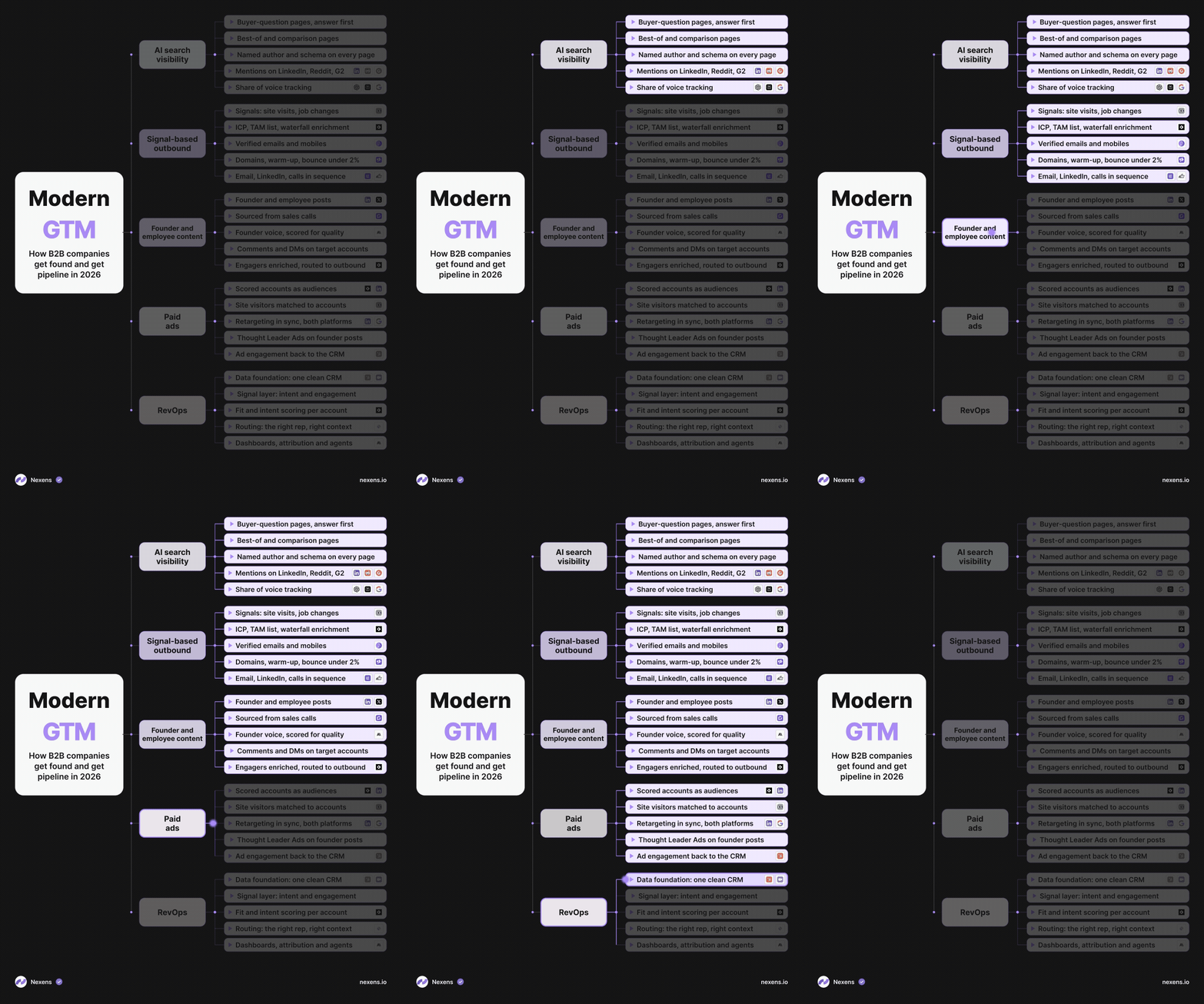
GTM gets expensive when every channel starts from zero. Content reaches one audience, ads target another, and sales works a different list. Each team can hit its targets while the pipeline barely moves.
The disconnect often sits between the channels. Someone reads a useful post, visits the website, and later receives outreach that ignores the problem that brought them there. The company has several opportunities to build on the same interest, but each interaction starts the conversation again.
A more connected go-to-market approach brings five parts together around the same buyer: search visibility, relevant outbound, founder and team content, paid distribution, and revenue operations.
1. Search visibility: answer the questions buyers bring
Help buyers find you when they are looking for a solution. Start with the questions they need answered before they can decide whether a conversation makes sense:
- Who is this for?
- How does it solve my problem?
- How does it compare with the alternatives?
Give each question a clear answer on your website. A buyer discovering you through Google or an AI search tool should be able to understand where you fit, which problems you solve, and what working with you involves.
This can mean a focused use-case page, a practical explanation of your process, or a comparison that makes the tradeoffs clear. Use specific examples and language your buyers would use in a conversation. Those pages also give sales and marketing useful material to share later in the journey.
2. Relevant outbound: connect the offer to the situation
Decide which companies you can help and what makes the timing relevant. A company hiring its first sales team faces different problems from one expanding into a new market. They may fit the same broad customer profile, but they need different conversations.
That context should shape the offer, the message, and who you contact. Before reaching out, make the connection explicit: what has changed at this account, what problem could that create, and why would your offer be useful now?
Personalisation starts with understanding the situation. A reference to someone’s job title adds little if the rest of the message could go to any company. A specific reason to talk gives the recipient something meaningful to respond to.
Treat a signal as a reason to investigate. A hire, a website visit, or a funding announcement can inform outreach, but it does not establish that a company is ready to buy.
3. Founder and team content: make your thinking visible
Give buyers a way to understand how you think before they speak to you. Explain a problem you see repeatedly. Break down a process. Answer a question that keeps coming up in sales calls.
The strongest starting point is often the work your team already does. An objection from a prospect can become an explanation of a tradeoff. A recurring implementation question can become a walkthrough. A decision you helped a customer make can become a useful framework, with their confidential details removed.
The person reading today might be someone your sales team contacts next month. Content can give that future conversation a foundation: the buyer has already seen how you approach a relevant problem.
Keep the feedback moving both ways. Sales conversations should inform content, and the questions people ask about that content should help sales understand what needs a clearer explanation.
4. Paid distribution: reinforce the problems sales is working on
Put useful content in front of the accounts you want to reach. If sales is pursuing a group of companies, marketing should know which ones and why.
Build the ads around the problems those accounts face. An explanation, a process breakdown, or a relevant use case can give a buyer a useful next step. Keep the message consistent with what they will see on the website and hear in a conversation.
For example, if outreach focuses on the difficulty of entering a new market, the supporting content and landing page should help buyers think through that same challenge. The connection should remain clear as someone moves between channels.
Review paid activity alongside the account’s wider journey. Clicks can help you assess an ad, while subsequent conversations help you understand whether the message is reaching people with a problem you can solve.
5. Revenue operations: carry the context forward
Revenue operations keeps the context available as a buyer moves between channels. The next person handling an account should be able to answer three basic questions:
- Who has already spoken to them?
- What did they ask about?
- What happens next, and who owns it?
A clean CRM and clear handoffs help your team pick up where the last interaction ended. Record useful information from conversations, agree on account ownership, and make the next action visible.
Start with information the team can reliably maintain. A concise note about the buyer’s problem and an agreed follow-up can be more useful than a dashboard full of activity with no clear owner. Add scoring and automation where they help the team make a decision or complete a handoff.
How the five parts work together
Imagine a buyer comes across a founder’s breakdown of a problem their team is facing. They visit the website to understand the approach. Later, an ad brings them back to a more detailed explanation.
Your sales team identifies a relevant change at the company and reaches out with a specific reason to talk. When the buyer responds, sales records their questions and the agreed next step so the next conversation can build on them.
Buyers will not all follow this sequence. Some will arrive through search; others will respond to outbound before reading anything you have published. The system should make room for both, with a consistent message and context that carries forward.
Every interaction should make the next one more useful.
Use your next GTM planning session to find the gaps
Choose one buyer segment and one problem you can help solve. Review the journey your team currently creates for that buyer:
- Can they find a clear explanation of the problem and your approach?
- Does outreach have a relevant reason to arrive?
- Does your team’s content address the questions buyers actually ask?
- Do paid campaigns reinforce the same message?
- Can the next person handling the account see the context and next step?
Fix the most obvious break first. You might need a clearer website page, a shared account list, or a better handoff after a reply. Build from there, so each channel contributes to a journey the whole team understands.